
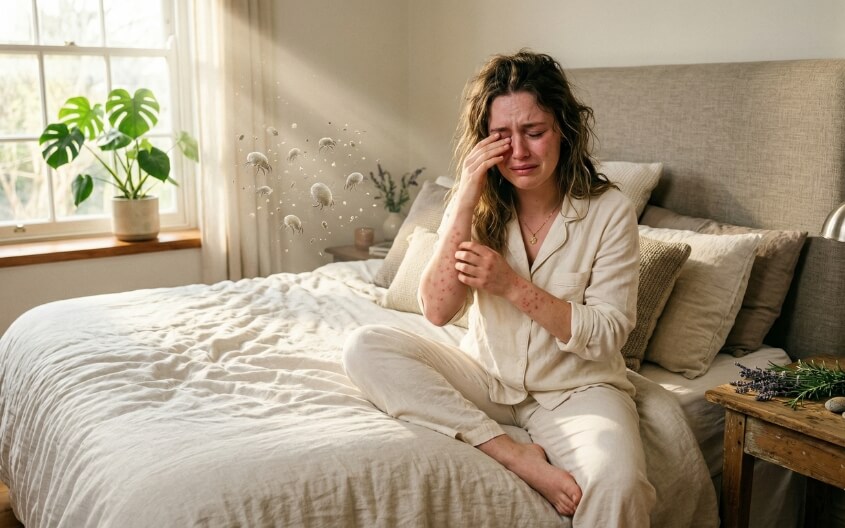
If you find yourself constantly sneezing, waking up with a stuffy nose, or dealing with unexplained skin rashes, you might be blaming the weather or seasonal changes. However, the real culprit could be hiding right inside your home: dust mites.
Dust mite allergies are one of the most common indoor triggers for asthma and skin irritation. Because dust mites are microscopic, you cannot see them, but your body definitely reacts to them.
So, how do you know if you have a dust allergy? Here are the top warning signs and what you can do to get immediate relief.
The Most Common Symptoms of Dust Allergies
A dust allergy occurs when your immune system reacts to proteins found in dust mite debris. If you are allergic, you will likely experience a mix of respiratory and physical symptoms, particularly when you are indoors.
Watch out for these core signs:
Why Do My Dust Allergy Symptoms Get Worse at Night?
If your coughing, sneezing, or skin irritation spikes the moment you get into bed, you are not alone. Dust mites thrive in warm, humid environments, making your mattress, pillows, and heavy blankets their perfect breeding ground. Every time you turn over, you send a cloud of microscopic allergens into the air you breathe.

How to Get Rid of Dust Mites and Stop the Allergies
You cannot completely eliminate dust, but you can neutralize the allergens that cause your symptoms.
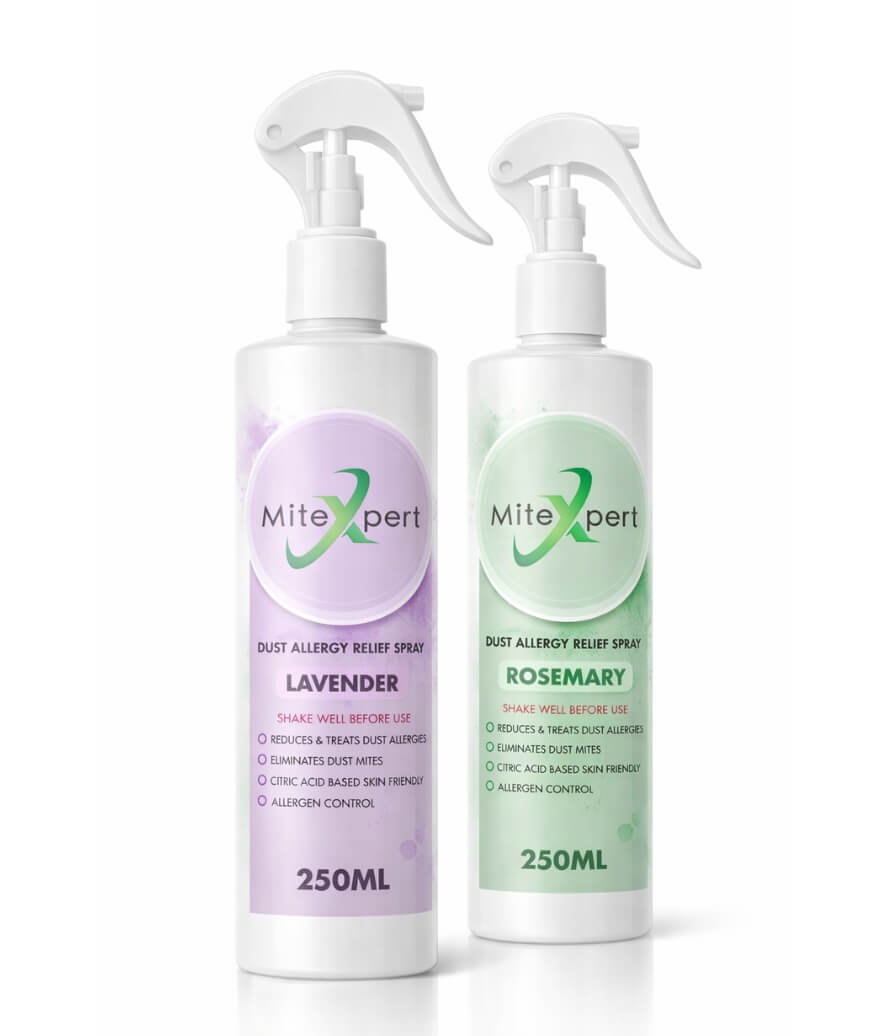
Instead of relying solely on antihistamines that only mask the symptoms, tackle the root cause directly with MiteXpert Dust Allergy Relief Spray.
Available in soothing Lavender and refreshing Rosemary, our plant-based, scientifically formulated spray is designed to neutralize dust allergens on contact. It is skin-friendly, uses natural essential oils, and is completely safe to use around families.
How to use it:
Simply hold the bottle 6-8 inches away and lightly mist over your bedding, carpets, curtains, and pillows. Let it air dry, and enjoy a clean, allergen-free environment.



Vivamus nec dui eget nulla congue congue sit amet eget nulla. Maecenas fringilla erat ut magna lacinia, vel ultricies arcu vestibulum. Etiam non nunc quis est pretium viverra eget in nisl.
Pellentesque habitant morbi tristique senectus et netus.